Most people who plan the south of France plan Provence: a week in the Luberon, a few days on the coast, the lavender if the timing works. West of the Rhône sits Languedoc, with the same Mediterranean climate, the same market culture and a fraction of the attention. My take on Languedoc or Provence? Languedoc is a strong choice for travelers who go to France for food and wine, and the wrong one for anyone whose picture of the south is lavender fields and the Riviera. Treated as its own destination, with its own reasons to go, it holds up very well. Treated as a stand-in for Provence, it will disappoint.
Is Languedoc the Same as Occitanie?
Not quite. Occitanie is the administrative region France created in 2016 by merging Languedoc-Roussillon and Midi-Pyrénées, and it runs from the Rhône to the Pyrenees and west past Toulouse. Languedoc is the older, historic name for the Mediterranean side of it. It’s also the name the wine world kept, so it’s the one you’ll see on labels.
The Rhône makes a reasonable rough border with Provence, and it puts a few places on the Languedoc side that people tend to assume are Provençal. Nîmes, Uzès and the Pont du Gard all sit in the Gard department, in Occitanie. The Camargue, the Rhône delta, straddles both regions.
What Does Languedoc Not Have?
Two things people associate with Provence aren’t here. The first is lavender. The fields in every photograph of Provence are on the Valensole plateau and around Sault, where they bloom from mid-June to early August. Languedoc has nothing on that scale.
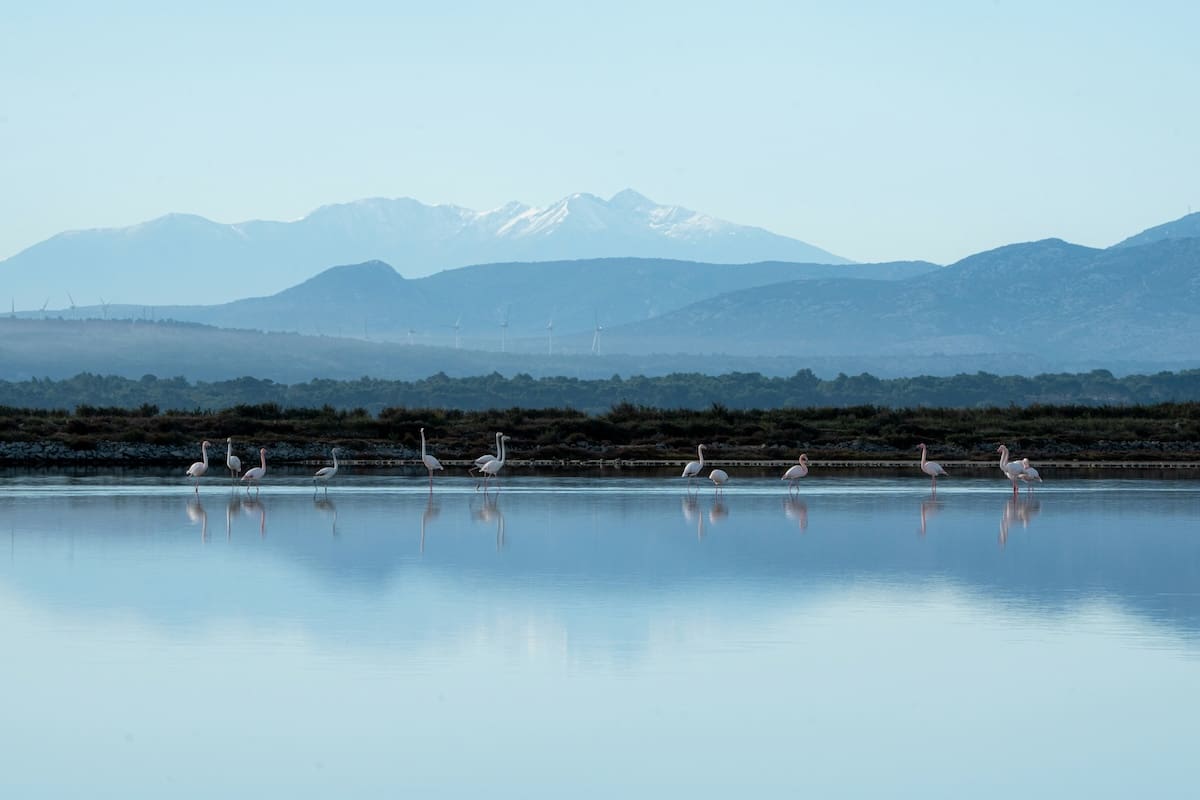
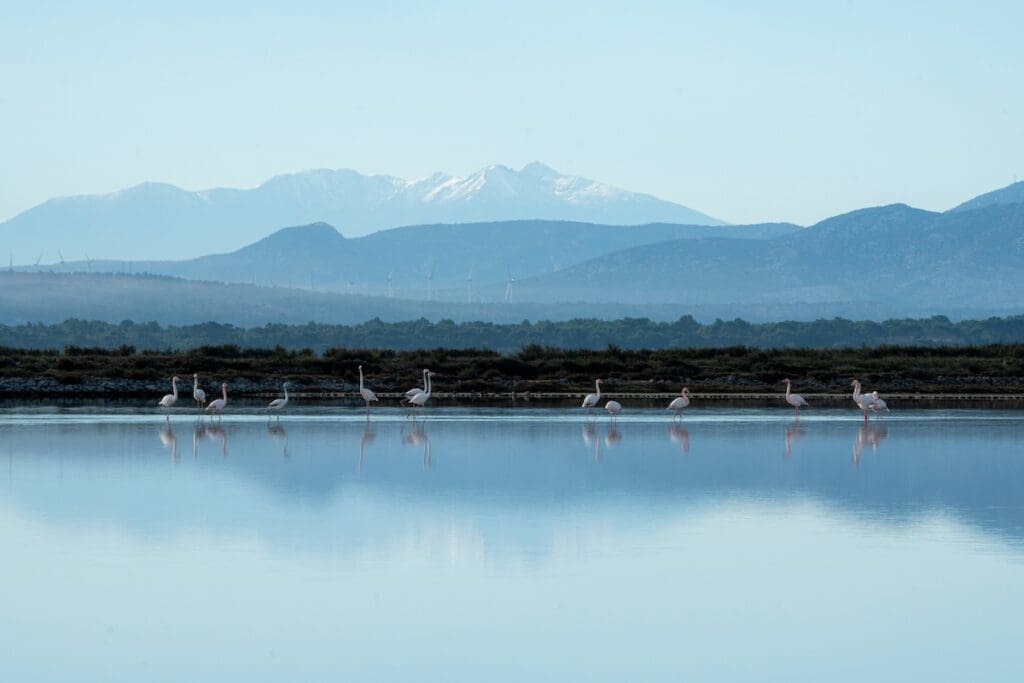
The second is the Riviera. Languedoc has more beach than most people expect: about 200 km of coast, much of it long, wide sand from La Grande-Motte down to Argelès-sur-Mer, with rocky coves near Collioure. What it doesn’t have is the scene that comes with the Côte d’Azur, or the limestone inlets of the Calanques outside Marseille. Parts of this coast are large modern resort towns, and they look like it.
If lavender and the Riviera are the point of the trip, Provence is still the right call.
What Is Languedoc Known For?
Roman monuments, a walled medieval city, a 17th-century canal and a line of hilltop castles. For a region with this little name recognition, the list is long. Occitanie holds several UNESCO World Heritage sites, most of them on the Languedoc side:
- Carcassonne, the walled medieval city, listed since 1997
- The Pont du Gard, the three-tiered Roman aqueduct outside Nîmes and France’s most-visited ancient monument
- Nîmes, whose Roman temple, the Maison Carrée, joined the list in 2023
- The Canal du Midi, the 17th-century waterway between Toulouse and the Mediterranean, listed since 1996
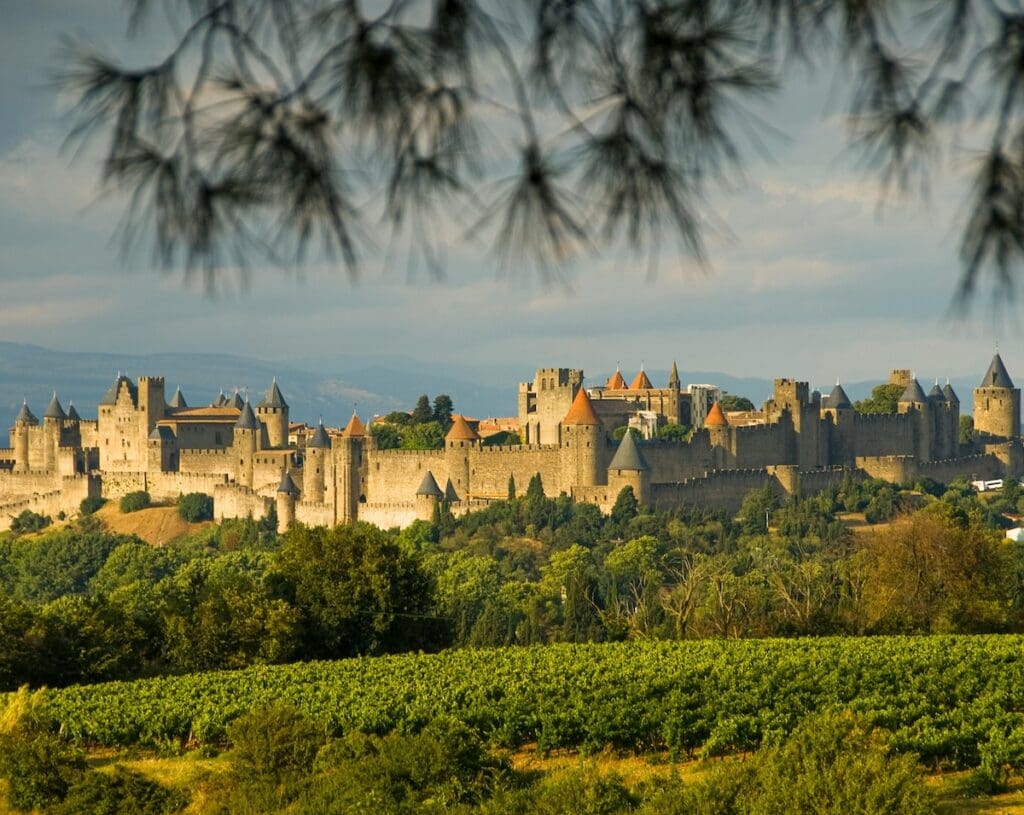
South of Carcassonne, the Cathar castles of Peyrepertuse and Quéribus sit on ridgelines in the Aude hills. They joined the UNESCO list in July 2026.
Then there are the towns: Montpellier, a university city with a medieval center; Uzès, with its Saturday market; Sète, a working fishing port on the Thau lagoon; and Collioure, near the Spanish border.
What Wine Is Languedoc Known For?
Volume, first, and increasingly a handful of appellations: Picpoul de Pinet for whites, Pic Saint-Loup for reds and Limoux for sparkling wine. Languedoc-Roussillon is the largest wine-producing region in France by vineyard area, and for a long time that size meant bulk wine, and the reputation outlasted the change in quality. The region is better understood now as a set of smaller appellations, several of them worth building days around.
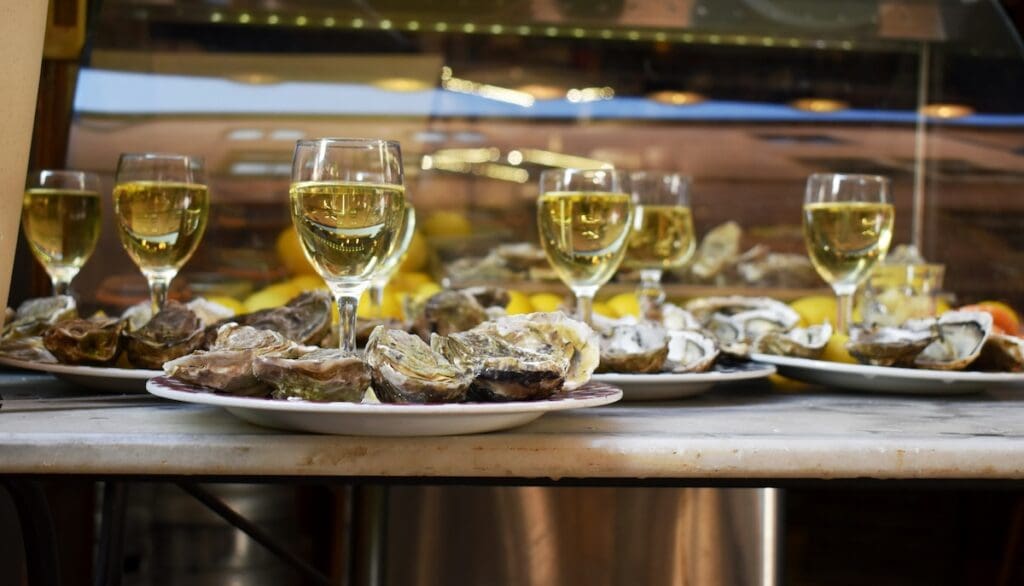
Picpoul de Pinet is my pick from the region. It’s a white made only from the Piquepoul grape, grown along the Thau lagoon west of Montpellier, and it’s lean, citrusy and faintly saline. It’s made for the oysters farmed in the same lagoon, and that’s how it’s drunk locally.
Pic Saint-Loup, north of Montpellier, sits on the cooler eastern side of the region, under a tilted limestone peak. Syrah leads, and the appellation is known for fresh, fragrant reds.
Limoux, south of Carcassonne, makes sparkling wine. Wine historians date its first sparkling wine to 1531, at the abbey of Saint-Hilaire, well before Champagne built its reputation. Blanquette de Limoux is the traditional version; Crémant de Limoux is the more modern one.
Faugères and Saint-Chinian, in the hills north of Béziers, round out the reds worth knowing. Across all of them, the value is strong for the quality.
The Food of Languedoc
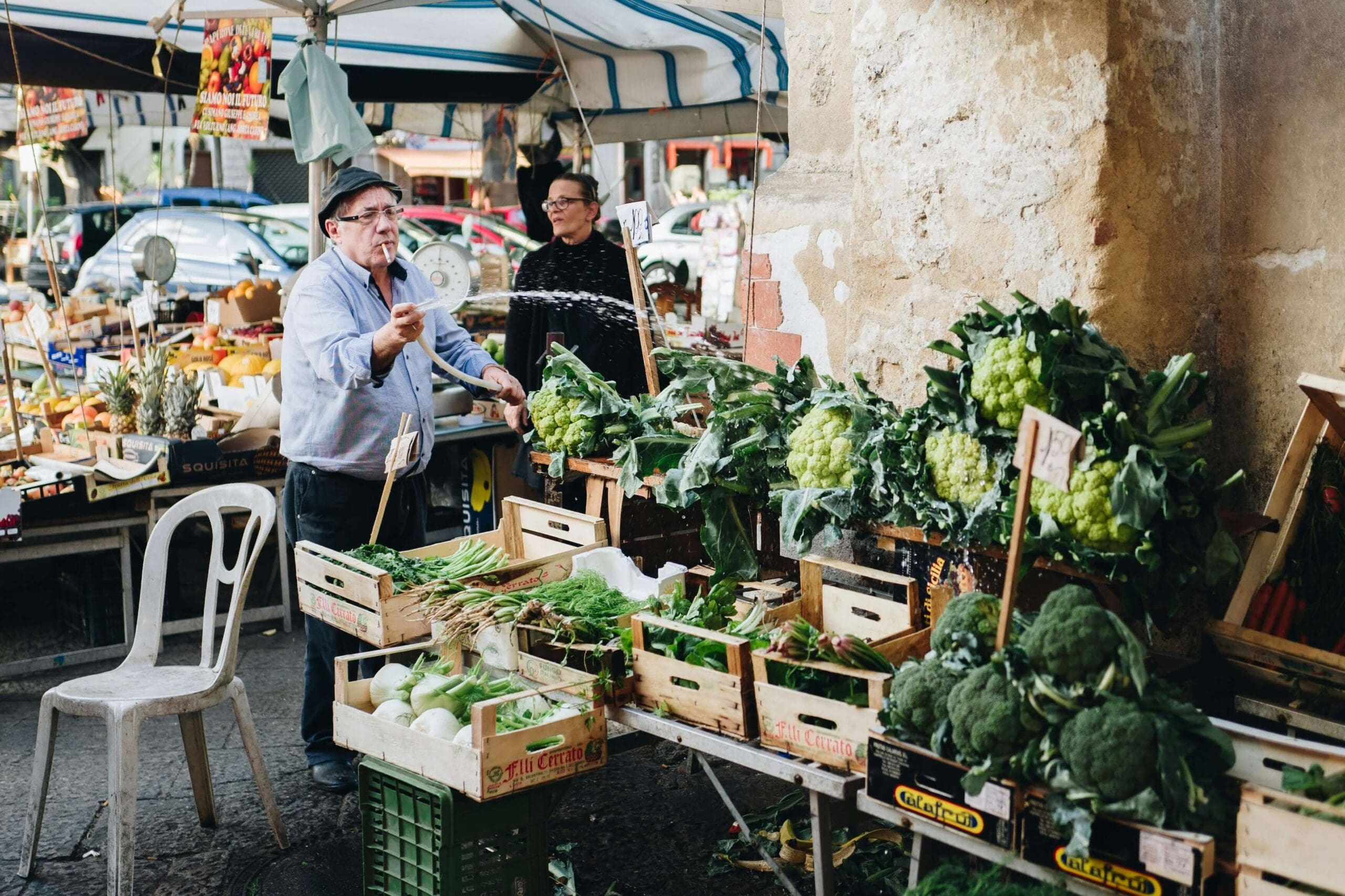
The food splits along the same line as the landscape. The coast cooks from the sea and the lagoon, and the interior cooks from the hills. It’s a good example of why food is the fastest way to understand a place.
On the coast, the Thau lagoon between Sète and Mèze produces Bouzigues oysters. The Mediterranean has almost no tide, so growers attach the oysters to ropes and hang them from tables in the lagoon. Sète’s own dish is the tielle, an octopus and tomato pie in a bread crust that came with Italian fishing families. Nîmes has brandade, salt cod worked into olive oil.
Inland, Castelnaudary claims cassoulet, white beans cooked slowly with duck confit and sausage, and the argument with Carcassonne and Toulouse over who makes it properly is a long one. From the Cévennes comes pélardon, a small raw-milk goat cheese with its own protected designation.
Languedoc or Provence: Who Should Choose Which?
Languedoc suits travelers who plan around meals, wine and towns where people live ordinary lives. Provence suits travelers who want the lavender, the Luberon villages and the Riviera. Both are worth the trip.
Languedoc is also a big region, and the sites above stretch from Nîmes to Carcassonne. I’d build it around two bases: one in the east, near Montpellier or Uzès, for Nîmes, the Pont du Gard and the Thau lagoon, and one in the west, near Carcassonne, for Limoux, the Cathar castles and the Canal du Midi. Spring and early fall are the strongest months, warm enough to eat outside without the heat of high summer. Where I add the most is the sequencing: which base fits the way you travel, which estates are worth the drive, and where the long lunches go so the days have structure instead of hours in a car.
Languedoc or Provence: Common Questions
Generally, yes. Provence has had decades of international demand and Languedoc hasn’t, which shows in hotel, restaurant and wine prices. The region also has fewer top-tier hotels, so the best rooms still book early.
Yes. Nîmes and Avignon are under an hour apart by car, so the two regions join easily. With ten days or more, a split between the Gard and the Luberon works well. With a week, I’d choose one.
April through June, and September into October. Both windows are warm enough for long lunches outside. July and August are hot, and the coast is at its busiest.
A week covers two bases without rushing. Ten days lets you add time on the coast or in the Cévennes.
Montpellier, Toulouse, Carcassonne, Béziers, Nîmes and Perpignan all have airports, though Béziers and Nîmes run mostly seasonal flights. From the US, most travelers connect through Paris, or take the high-speed train from Paris to Montpellier or Nîmes.
The Other South of France
For a traveler who chooses a destination by what’s on the table, Languedoc makes a strong case: France’s largest wine region, a coast built around oysters and Picpoul, Roman monuments, and towns that still run mostly for the people who live in them. The lavender and the Riviera stay in Provence, and for this kind of trip, that’s a fair trade.
If Languedoc is on your list for next spring, my newsletter is where I write about what I’m booking now and when to lock it in. You can join here.