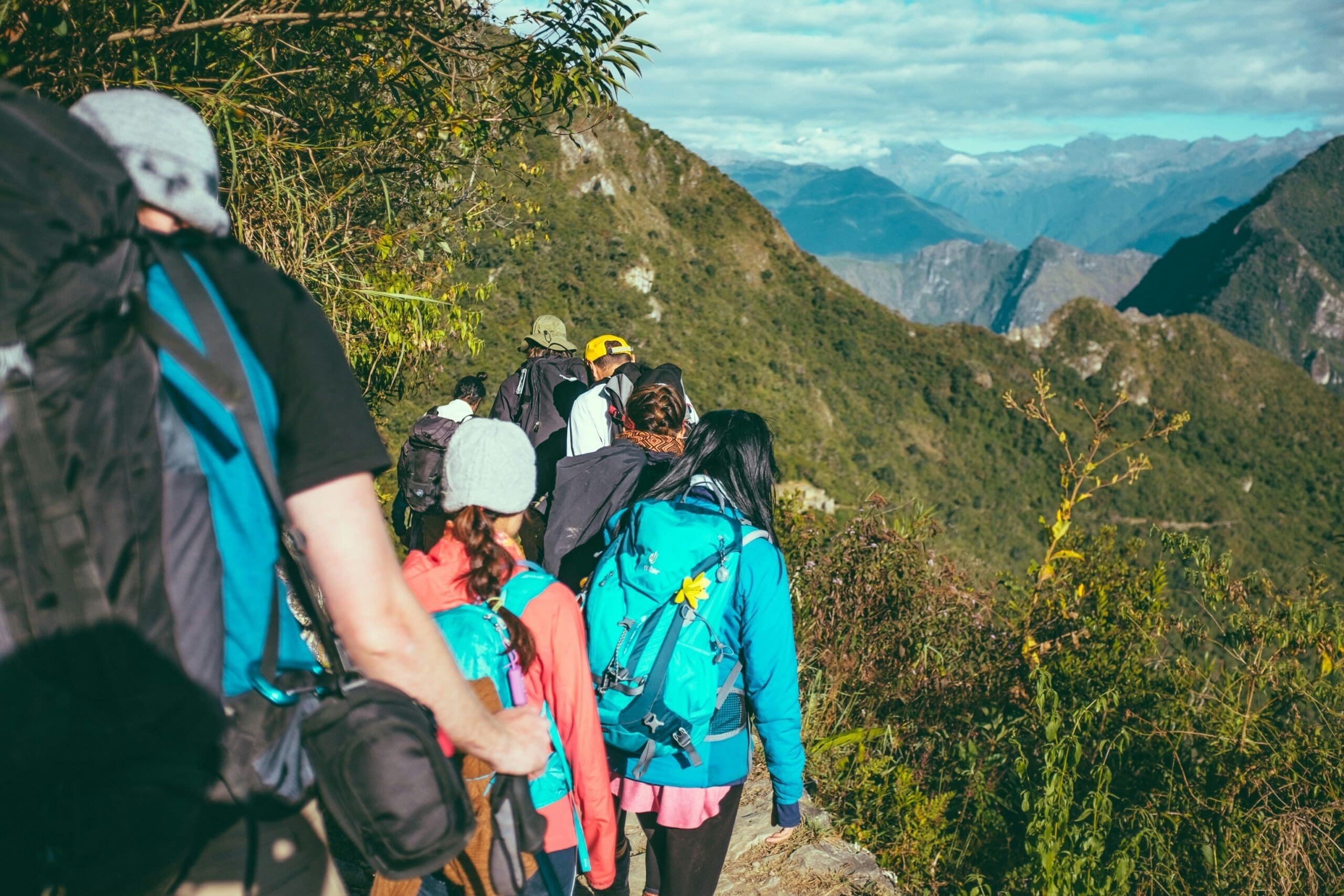
When people hear “active travel,” a specific picture tends to form. A heavy pack. Legs burning on a climb nobody warned them about. Accommodation that’s fine, given the context, but not somewhere you’d choose otherwise. The whole thing coded as an experience you endure rather than one you enjoy.
That picture keeps a lot of people from ever asking about it. Which is a problem, because what I actually design when a client wants active travel in Europe looks almost nothing like that.
What Active Travel in Europe Actually Looks Like
Here’s a more accurate image: you’re cycling through Provence in the early morning before the heat arrives, following a route that winds through vineyards and small villages, and your luggage is already at the next hotel because someone transferred it while you were riding. Dinner is somewhere deserving of your reservation. The bed is genuinely good.
Or you’re hiking in the Dolomites, moving through a landscape that’s hard to believe is real, and at the end of the day you’re in a hotel with a view and a proper shower and a meal that reflects where you are. You were outside all day. You also slept well.
This is not the same category as roughing it. The physical engagement is real. The discomfort is optional.
The range of what’s possible
Active travel in Europe covers a lot of ground. Cycling tours, walking tours, hiking itineraries, multi-sport trips that combine two or three activities across a week. The destinations range from the obvious (Tuscany, Provence, the Dolomites, the Camino) to routes that take more knowing to find.
One of my preferred suppliers for this type of travel is Backroads, and there’s a reason they’ve been at the top of this category for decades. They design trips that take the activity seriously without treating comfort as a concession. The bikes are good. The hotels are good. The food reflects the region. Guides know the area well enough to make the day feel personal rather than choreographed. Clients who book through me also receive a welcome gift from Backroads that isn’t available when booking direct, which is a small thing but a nice one.
That said, Backroads is one operator in a landscape of many, and knowing when they’re the right choice and when something else fits better is part of what I do.
FAQ: How Fit Do You Actually Need to Be?
This is the question I get most often, and the honest answer is that the bar is lower than most people assume. E-bikes have changed active travel in a meaningful way. You still feel the terrain, stop when something is worth stopping for, and cover ground in a way that a car or train simply doesn’t allow. You just aren’t suffering on the climbs.
For someone who hasn’t been on a bike regularly, or who has a knee that makes long ascents difficult, or who simply wants to enjoy the ride rather than prove something, an e-bike makes a cycling trip genuinely viable. Most quality operators offer them as standard now, and the stigma around them has largely disappeared.
You set the pace, the itinerary follows
Good active travel design builds in range. A day where one person does the longer loop and another takes the shorter route and they meet for lunch. A walking day that has an easy option and a harder one running parallel. A rest day mid-trip that isn’t advertised as such but exists because someone thought carefully about pacing.
This is how a couple with different fitness levels travels together well. Or how someone who wants to push themselves shares a trip with someone who wants to move at a more relaxed pace. What the best trips tend to share is often this quality: they were designed with enough flexibility that different people can experience them differently yet together.
What Makes One Trip Completely Different From Another
Two cycling trips through Tuscany can look nearly identical on paper and feel entirely different on the ground. The difference lives in the details that most people don’t know to look for.
Bike quality matters more than it sounds. A well-fitted, well-maintained bike on a week-long trip is a different experience from one that isn’t. Luggage transfer, the arrangement where your bags travel ahead to the next hotel while you ride, is not universal across operators, and its absence changes the nature of the trip considerably. The support vehicle matters. The ratio of guided time to independent time matters. And the quality of hotels matters at the end of a long day outside, when where you’re sleeping is the only thing you care about.
Why this is harder to navigate than it looks
There are dozens of operators running active travel in Europe, and the quality variation between them is significant. Itineraries overlap. Marketing language is similar. What separates a trip that works from one that doesn’t often comes down to specifics that aren’t visible from a website: how the logistics actually function, which bikes they use, how experienced the guides are on a particular route, whether the hotels are genuinely good or just conveniently located.
Where the stress usually starts in self-planned active travel is almost always here, in the research stage, before anything has been booked. The options are numerous and the meaningful differences are buried. Most people give up and either book the most recognizable name or the one with the best photography.
What Good Planning Actually Does Here
The operator that works well for one client is wrong for another, even on the same route. A couple in their sixties who want moderate daily mileage and excellent food and wine at the end of it requires a different trip than someone who wants longer days and more elevation. A solo traveler joining a group trip needs something different from a family that wants a private itinerary.
Knowing which operator matches which traveler, and which itinerary within that operator’s catalog is actually right for a specific client, is what custom planning actually means in practice. It’s not just booking a trip; it’s knowing the landscape well enough to match people to it accurately.
Active travel in Europe is one of the trip categories that looks more straightforward than it is. The landscape of options is wide, the differences between them are real, and the trips that work well almost always reflect someone who knew what they were looking at.
If this is a type of trip you’ve been curious about but haven’t known where to start, reach me here . That’s exactly the kind of conversation worth having before you start researching on your own.