When a client comes to me wanting to book their first expedition cruise, the conversation almost always starts the same way. They’ve done a traditional cruise, or a safari, or a handful of independent trips to places they already knew well and they want something more immersive. Something where the destination is the entire point. They’ve heard expedition cruising described as life-changing and they want in. What they’re less sure about is whether to start at the end of the world or somewhere closer.
Most people’s mental image of the category stops at Antarctica. Ice, penguins, the Drake Passage, a two-week commitment, and a booking window that opens eighteen months before the ship sails. It’s an incredible experience. But it’s not where most travelers should begin. Expedition cruising has many entry points that deliver the same format (small ship, naturalist-led landings, an itinerary that moves based on weather and wildlife rather than a fixed port schedule) without requiring every client’s first foray to be their most ambitious one.
Expedition cruising still represents roughly one percent of the total cruise passenger market. Most people doing it for the first time are not experienced cruisers at all. The format works, in part, because of that.
What Actually Makes Expedition Different From Any Other Cruise
The ship is the vehicle, not the destination
On a traditional cruise, the ship is a meaningful part of the appeal: the restaurants, the entertainment, the onboard amenity list. On an expedition ship, the ship is how you reach somewhere the ship can actually get to, and passenger counts are a significant reason why.
The ships in this category typically carry between 80 and 200 guests. Some run as small as a dozen for ultra-remote sailings. Compare that to a mainstream ocean liner at 3,000 to 5,000 passengers, and the difference in what becomes possible onshore is immediate. At 100 guests, you have a Zodiac landing with a naturalist who knows your name and can adjust the outing based on what the group needs. You have small groups at each site, moving at a pace that actually lets you observe. The Antarctic treaty limits landings to 100 guests at a time which means a ship carrying more than 200 often can’t put guests ashore at all.
That scale also enables a quality of product that has changed significantly in the last decade. The ships operating in this category now are not the spartan, research-adjacent vessels the word “expedition” tends to conjure. Butler service, specialty dining, spas, submarines: these are standard features on many expedition ships. Viking’s expedition vessels match their ocean fleet’s interiors cabin for cabin. Scenic Eclipse runs ten specialty restaurants and a 6,000 square foot wellness facility. What “expedition” implies now is access, not austerity.
Who is it for?
The question I hear most from clients circling this category: am I fit enough? The honest answer is that the bar is lower than most people expect. Operators typically use a benchmark somewhere close to: can you manage stairs and get in and out of a Zodiac? That covers a very wide range of mobility levels. Guests in their eighties sail to Antarctica regularly. The variable is less the category and more the specific ship and itinerary; and getting that match right is exactly the conversation we have before a booking is made.
The Galapagos — Where Most Guests Have Never Cruised Before
Why the logistics work in a first-timer’s favor
Galapagos expedition cruises are structured Saturday to Saturday, aligned with airlift from Quito or Guayaquil. Airport transfers are included by most operators, and hotel nights on either end are frequently handled within the same booking. You fly into Ecuador, you’re met at the airport, you transfer to the ship. On the return, the same process runs in reverse. There’s no self-navigated logistics, no independent transfers through an unfamiliar city, no gap between arrival and embarkation that a first-time expedition traveler needs to sort out alone.
The Galapagos also benefits from a park permitting system that caps group sizes at landing sites regardless of what ship you’re on. The destination manages its own access in ways that most places can’t. You’re not competing with a thousand passengers for the same stretch of beach. A ship of eighty guests lands in small groups, rotates through sites, and operates within a structure the Ecuadorian government regulates closely.
The multi-generational angle, and why it works here
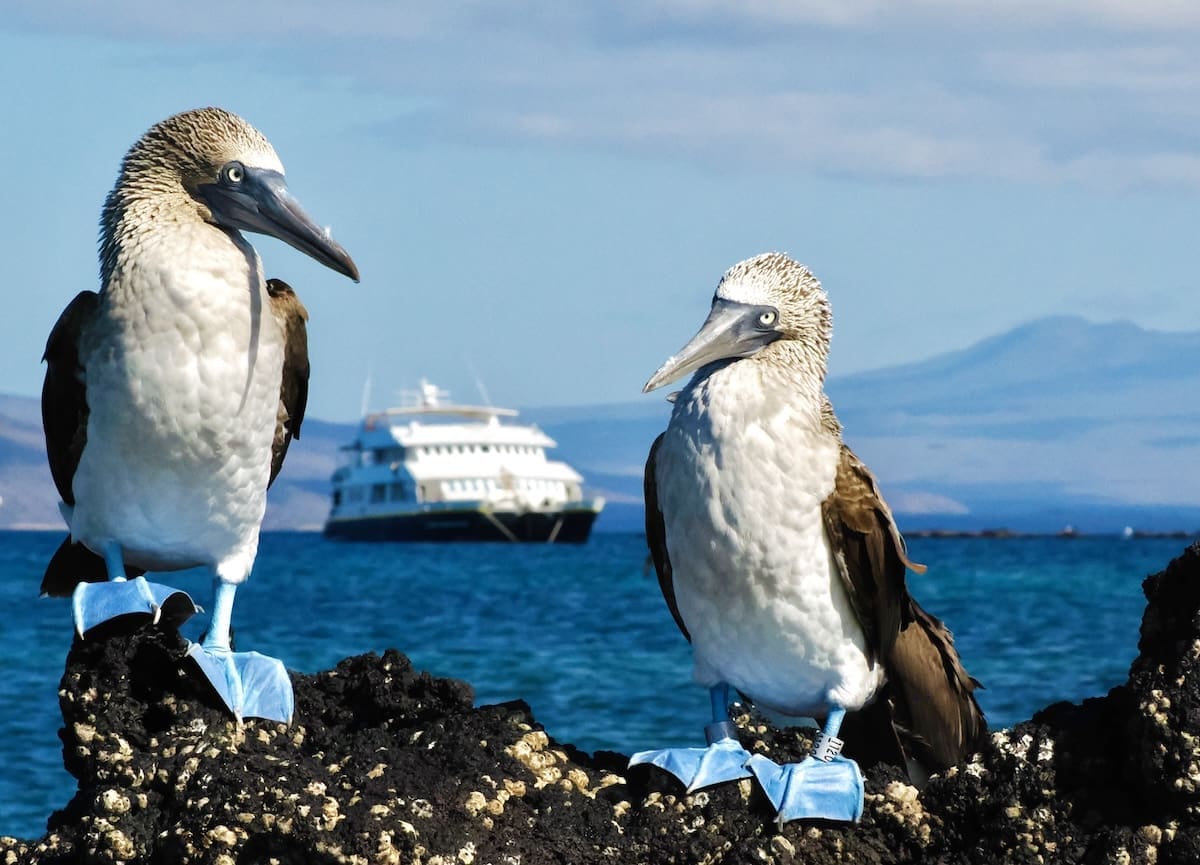
Roughly 80 percent of expedition guests in the Galapagos are new to cruise travel. The average age skews younger than most expedition destinations (mid-forties) and multi-generational bookings are common. There’s a structural reason for this. The wildlife is at close range, unhurried, and entirely unbothered by human presence. Blue-footed boobies will stand three feet from you and appear genuinely indifferent. Marine iguanas pile up on rocks within arm’s reach. The encounters don’t require any particular fitness level or tolerance for discomfort. A ten-year-old and an eighty-year-old can have the same wildlife experience on the same landing.
Grandparent-grandchild trips are a natural fit. So are families marking a graduation or significant milestone. The Galapagos tends to hold up as the memory.
Iceland: Short Flight, Genuinely Wild Landscape
The geographic argument
Reykjavik sits just below the Arctic Circle. Most US travelers reach it in six to seven hours on a direct flight with Icelandair serving a significant number of US gateways, and the transatlantic crossing is manageable compared to what most expedition destinations require. For a traveler who wants the feel of a northern expedition without a full commitment to the polar schedule, the flight time alone removes a significant barrier.
The landscape delivers what the format promises. Volcanic coastline, sea caves accessible only by Zodiac, seabird colonies on cliffs that no road reaches, fjords in the West Fjords region that don’t appear on any standard itinerary. Iceland is a country many travelers think they understand from a land-based visit. An expedition ship shows them a different one.
Why shorter itineraries work in your favor here
Eight to ten-day Iceland sailings are the standard format. That’s the right length for a first expedition — long enough for the ship to feel familiar, short enough that a client who’s uncertain about the commitment isn’t overextending. A traveler who has done Iceland overland before and wants to understand what the small-ship format adds is a natural candidate. So is someone whose schedule makes a two-week departure impractical but who genuinely wants the expedition experience.
The British Isles: Familiar Geography, Completely Different Way of Seeing It
What small ships access that no other format does
There are more than 6,000 islands in the British Isles. Most see fewer than a thousand visitors per year, because reaching them requires a vessel small enough to navigate the approaches and equipped with Zodiacs to land where there’s no dock. Skellig Michael off the west coast of Ireland. The outer Orkney islands. Shetland’s seabird cliffs. These places exist within a geography that’s technically familiar — Scotland, Ireland, coastal England — but are entirely off the itinerary of anyone traveling by any other means.
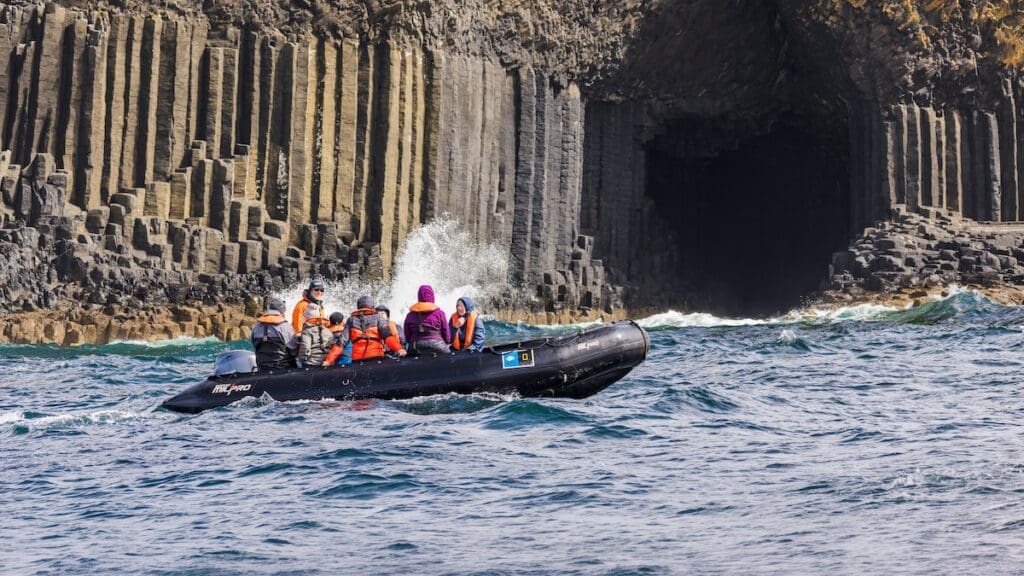
That familiarity is part of what makes this a strong entry point for a first expedition cruise. A client who’s uncertain about committing to an entirely unknown part of the world can start here. The place names register. The cultural context is already there. And the expedition format shows them a version of a geography they believed they already knew.
Who tends to book this
There’s a consistent overlap between British Isles expedition clients and well-traveled clients who’ve exhausted standard European itineraries. River cruise clients migrate here. History-focused travelers, birders, and people who have done Scotland or Ireland land-based and want a different angle all arrive at this option eventually. What I hear afterward is usually some version of: “I thought I knew Scotland.” The coastline you see from a Zodiac at the foot of a sea stack is not the Scotland you drove through.
Choosing Your First Expedition Cruise
None of these four is the right answer for every traveler. The Galapagos suits the multi-generational group or the traveler who wants a defined, well-contained experience with exceptional wildlife access. Iceland suits someone who’s already been to the country overland and wants to understand what small-ship cruising actually adds, or who needs a shorter commitment. The British Isles suits the experienced traveler who’s ready for what the best trips actually involve — which is often access, not coverage.
The question I ask a client who comes to me at this stage: not which destination wins on paper, but which one matches the actual situation. Flight tolerance, travel party, budget, timing, and what this traveler actually does once they’re somewhere new. The destination comes after that.
If you’ve been circling expedition cruising and haven’t settled on a direction yet, I’m easy to reach. Matching the right itinerary to the right first-timer is exactly the work a good travel advisor does, and it’s a much shorter conversation than most people expect. For more on this kind of thinking, my newsletter covers expedition travel and related territory regularly. You can subscribe here.