Travel has many purposes. Most often it is a way to escape, a way to take a break from the stressors of our daily lives. It offers a respite from the mundane and the dopamine hit of experiencing a new place. We all have our own unique way of experiencing travel, whether you get this from a beach, or an adventure cruise.
What is not talked about as much when it comes to travel are the sociological and cultural benefits. When we experience a place outside of the comfortable bubble of everyday life, we broaden our worldview. We realize that people “out there” are very much just like us, that we all share a universal need to be loved, accepted, and appreciated. A different language, a different style of dress, or a different skin color does not change the fundamental human experience.
You do not need to travel across the world to get the benefits of travel. You can go to a different neighborhood, a different town, or a different state and still get the same effect, because the core mechanism is not distance, it is contrast. It is the simple act of stepping into a setting where you are not automatically fluent, not automatically comfortable, and not automatically centered.
When you travel, even in small ways, you move yourself out of the patterns your life runs on. You have to pay attention again. You have to read the room, watch the rhythm of the day, and notice what you usually ignore because your own routines have trained you to stop seeing them. That is the beginning of the real benefit. Travel interrupts autopilot.
Travel takes you out of your comfort zone
A lot of people hear the phrase “out of your comfort zone” and imagine something extreme, like climbing a mountain or backpacking through a place where they do not speak the language. In reality, discomfort in travel is usually smaller and more ordinary than that. It is the moment you are not sure how to order, the moment you cannot quite read the social cue, the moment you realize you are dressed differently than everyone else, the moment you are navigating a train platform and you are a little behind the flow.
Those moments can feel inconvenient, but they do something critical. They are reminders the world does not orient around you, not as a sense of punishment, but to offer perspective. In your daily life, you are typically rewarded for efficiency and competence. You know how everything works, you know what to say, you know where to go, and you know what will happen next. Travel takes away just enough of that certainty to make you more present and a bit more humble.
It is important to realize that humility is not about shrinking yourself, it is about widening your view. When you are the one who is unsure, you become more patient with other people who are unsure. When you are the one who needs help, you see what it feels like to rely on someone else’s kindness. And when you experience that kindness in a place that is not yours, it becomes harder to cling to the story that people are fundamentally divided into us and them. You may still have differences, you may still disagree about things that matter, but the human texture becomes undeniable.
In uncertain times, that matters. When the world feels unstable, people naturally narrow their focus. They retreat into what they can control, and they lean on simpler narratives that make things feel legible. Travel, at its best, pushes gently in the opposite direction. It gives you lived evidence that complexity is survivable, and that unfamiliar does not automatically equal unsafe.
Travel introduces you to differences, and that is a gift
Exposure to difference is often framed as a kind of moral homework, something you should do because it makes you a better person. I do not think that is why it works. It works because difference is clarifying. It forces you to notice the parts of your own life that you have treated as universal, when they are actually just local.
Sometimes this is light and even funny. You realize breakfast is not a sweet pastry everywhere. You realize dinner does not always happen at six. You realize personal space is not measured the same way, and that what feels warm and social in one culture can feel intrusive in another. You realize rules can be strict in one place and loose in another, and both can function. You realize time can be treated as a hard line or a flexible agreement, and that neither approach is inherently more civilized. They are just different strategies for living.
But the deeper differences are often social. How families move through public spaces. How children are treated in restaurants. Whether people dress up for an ordinary evening out. Whether conversation with strangers is normal or unusual. Whether service is formal or friendly. Whether the city is built for pedestrians or for cars. Whether the culture rewards restraint or expresses emotion freely. These are not small details. They are the scaffolding of daily life, and seeing alternative versions up close expands your sense of what is possible.
There is a sociological payoff here that is easy to miss. When you only live inside one cultural system, it is hard not to confuse preference with truth. Travel shows you that many of the things you assumed were simply how life works are actually choices your society has made over time. That realization can make you less reactive. If another place handles something differently and still produces joy, stability, and community, then your way is not the only way. It is just your way.
This is where travel becomes more than leisure. It becomes a form of cultural literacy. You start to understand that people’s behaviors are often logical responses to their environment, their history, their economy, their climate, their religion, their political structure, their family systems. You stop flattening people into stereotypes because you have watched them live.
And when you return home, you bring that expanded lens with you. You may find yourself less easily outraged, less eager to reduce people to a headline, less quick to assume bad intent. Not because travel makes you superior, but because it gives you more data. It is harder to fear what you understand.
Travel introduces others to you and your culture, too
This is the part people do not always want to think about, but it is real. When you travel, you are not just observing. You are being observed. You become, in small ways, a representative of where you are from, whether you want that role or not. That can feel uncomfortable, but it is also an invitation to show up with care.
In many places, especially those that rely on tourism, local people have accumulated a long mental file on visitors. They have seen generosity and they have seen entitlement. They have seen curiosity and they have seen condescension. They have watched visitors treat the place as a backdrop rather than a living community. They have also watched visitors return year after year, learn names, learn phrases, build relationships, and become something closer to a regular.
Your behavior is noticed. How you speak to staff. Whether you greet people. Whether you say please and thank you. Whether you treat service workers with respect. Whether you ask questions that signal genuine interest rather than interrogation. Whether you complain loudly about things that are normal for the place. These are not trivial moments. They are how culture is exchanged in real time.
This is also where travel becomes a practice, not just an activity. It asks you to be a true representation of yourself. Not the curated, performative self, but the grounded one. The one who knows how to be appreciative without being patronizing and one who can receive hospitality well, which is its own kind of skill. The one who understands that you can be wealthy and still be gracious, that you can be well traveled and still be curious, that you can have high standards and still be kind.
If you are traveling during uncertain times, this matters even more because tension is often already present. People everywhere are dealing with their own anxieties about economics, politics, safety, migration, and identity. A visitor who arrives with humility and warmth can create a surprisingly meaningful countercurrent. It is not grand diplomacy. It is something smaller and more human. A conversation. A laugh. A moment of mutual recognition.
The antidote is not travel itself, it is what travel does to fear
Fear feeds on distance. Not physical distance, but social distance. It grows when we have no direct experience of the people we are afraid of, when our impressions come primarily from narratives designed to provoke us. The less contact we have, the easier it is to believe that other people are fundamentally different, less complex, less human.
This is why travel can be such a powerful antidote in times of uncertainty, fear, and division. When you are introduced to something new, it becomes less scary, less other. You begin to connect and understand one another, not through slogans or think pieces, but through ordinary contact. You ask someone where they grew up. You learn how their day is structured. You see how they care for their parents, how they raise their kids, how they celebrate, how they grieve, how they work. You see the small human gestures that are the same everywhere.
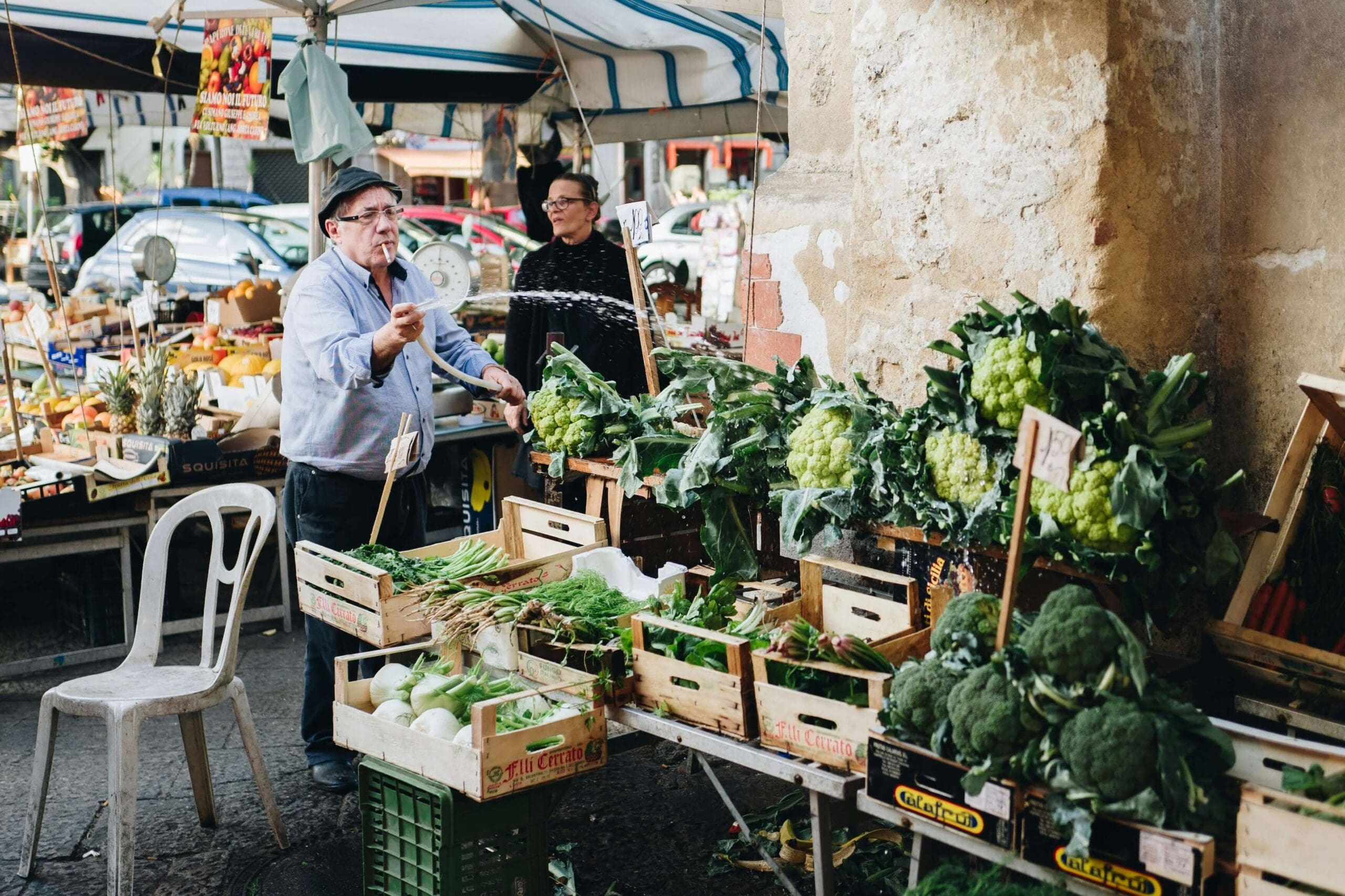
None of this requires a dramatic itinerary. It requires attention and a willingness to engage, even briefly. It can happen at a market stall, at the front desk of a hotel, in the back of a taxi, on a walking tour, at a café where you become a familiar face over a few mornings. The point is not to collect interactions like souvenirs. The point is to let yourself be moved by the fact that other people are living full lives right alongside you.
This is also where conscious travel comes in. Travel done with purpose does not mean every day needs to be educational or meaningful in a heavy way. It means you are aware that you are entering someone else’s home, even if that home is a major city with millions of visitors. It means you ask yourself what you are supporting with your choices, how your presence affects the place, and whether you are engaging in a way that leaves dignity intact.
And yes, you can still go lie on a beach at an all-inclusive in Mexico. Rest is not frivolous, and ease is not a moral failure. But if you want the deeper benefits of travel, promise yourself you will do one thing that acknowledges the place you are in. Introduce yourself to the local staff. Learn a few phrases, even if you speak in broken Spanish. Ask a question and listen to the answer. Treat the people around you as people, not as part of the product.
Because that is the real point. Travel is not just a break from life. At its best, it is a return to something that modern life often dulls: the ability to recognize yourself in someone else, and to let that recognition soften the edges of fear. In uncertain times, that kind of softening is not naive. It is necessary.