How the Island Learned to Taste Differently
To understand Sicilian food, you have to understand its Arab period. Not as a brief occupation or a decorative influence, but as a foundational moment that permanently altered how the island eats, farms, and understands flavor. Arab rule in Sicily lasted for roughly two centuries, from the early ninth century until the Norman conquest in the late eleventh century. That span was long enough to do more than leave traces. It reshaped systems.
Agriculture, trade, urban life, and food culture were reorganized in ways that still define Sicily today. What emerged was not an interruption of Sicilian identity, but an expansion of it.
Arab forces first landed in Sicily in 827 CE, initially invited by a Byzantine commander seeking support in a regional power struggle. What began as a tactical alliance evolved into a sustained campaign. By 902, Palermo had become the capital of the Emirate of Sicily, and by the mid tenth century, most of the island was under Arab control. Sicily’s value was immediately clear. Fertile, strategically positioned between North Africa and Europe, and embedded in Mediterranean trade routes, it was not a peripheral holding. It was a prize.
Arab rulers invested accordingly. Palermo grew into one of the most important cities in the Mediterranean, known for its gardens, markets, libraries, and advanced water systems. Contemporary accounts describe it as prosperous, cosmopolitan, and intellectually active. Food culture evolved alongside this infrastructure. What took place during this period was not the introduction of a handful of new dishes, but a complete reorganization of how food was produced, distributed, and valued.
The most enduring Arab contribution to Sicily was not a recipe, but infrastructure.
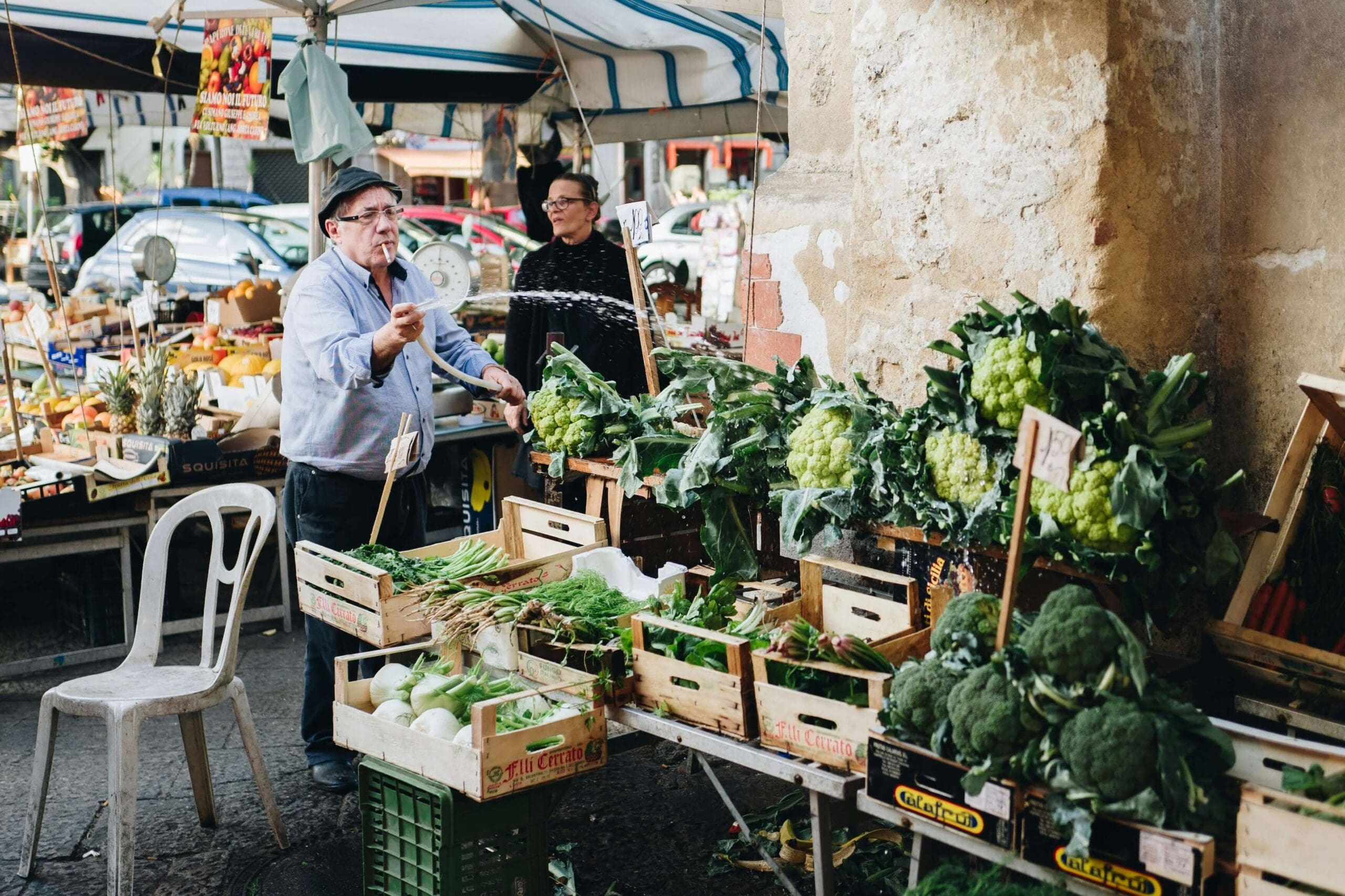
Arab engineers transformed how water moved across the island, introducing irrigation systems that allowed canals, underground channels, and carefully managed fields to flourish. Land that had once been marginal became productive. This shift fundamentally changed what people ate and how often they ate it. Citrus fruits spread across the landscape. Sugar cane was cultivated and processed locally, turning sweetness into a daily possibility rather than a rare luxury. Rice fields appeared, alongside eggplant, artichokes, pistachios, almonds, sesame, saffron, and spices such as cinnamon and cloves.
These were not elite ingredients reserved for court kitchens. They entered daily cooking and reshaped the Sicilian palate from the ground up. The land itself began to taste different. Sicilian cuisine shifted from being purely sustaining to being expressive. Food became a way to communicate balance, care, and refinement rather than simple survival.
Arab culinary logic prized harmony. Sweet and savory were not opposing categories, but complementary forces meant to coexist. Sweetness softened bitterness. Acidity sharpened richness. Dried fruits and nuts added texture and depth. Vinegar and sugar worked together rather than canceling each other out. This philosophy took hold in Sicily and never left.
Caponata is the most visible example, but it is far from the only one. Vegetables are often prepared with both sweetness and bite. Sauces carry layered flavors rather than singular notes. No single element is meant to dominate the plate. This approach was never about indulgence. It was about equilibrium, a worldview that valued composure over excess.
Rice and saffron, both introduced under Arab rule, fundamentally altered how grains were understood. Early rice dishes were simple and aromatic, often eaten by hand, practical foods suited to work and travel. Over time, these preparations absorbed influences from subsequent Norman and Spanish periods. Arancini as they exist today came later, but their foundation is unmistakably Arab. The use of rice, the presence of saffron, and even the naming of the dish after oranges all point to this lineage. What is now considered casual street food is, in fact, layered history shaped by centuries of continuity and adaptation.
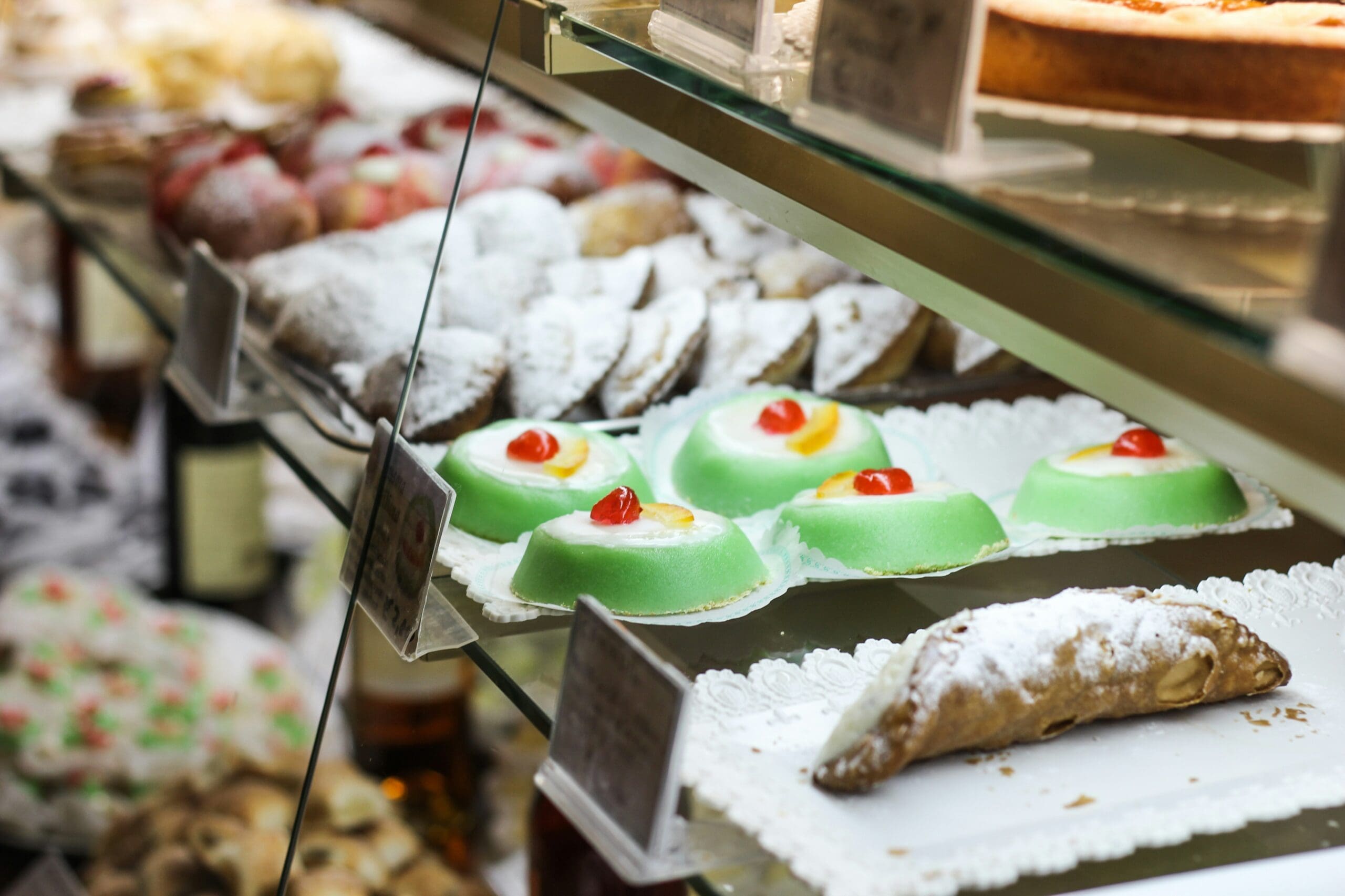
Arab rule also transformed Sicily’s relationship with sweetness. With sugar cane and almond cultivation came an entirely new pastry tradition. Almond paste, sweetened and shaped, became a defining medium. Sugar moved from rarity to resource. Marzipan, known locally as pasta reale, is a direct inheritance. The marzipan fruits of Palermo are not decorative novelties, but symbolic expressions of abundance, shaped by Arab techniques and preserved through centuries of religious and familial tradition.
Cassata follows the same logic. Ricotta reflects Sicily’s pastoral past, while sugar, citrus, and candied fruit speak to Arab agricultural systems and taste preferences. The dessert feels lavish because it was born in a moment when sweetness had newly become possible. Cannoli belong within this same framework. Sweetened ricotta, citrus peel, and cinnamon are not accidental flavorings. They align precisely with Arab sensibilities that valued fragrance, contrast, and restraint.
These sweets endure because they are not trends. They are memory made edible.
In western Sicily, particularly around Trapani, Arab influence never fully receded. Couscous remains part of local cuisine, adapted to Sicilian geography and ingredients. Fish replaces lamb. Local wheat replaces imported grains. Spices are used with care rather than abundance. This is not revival or homage. It is continuity. Couscous became Sicilian by staying useful, absorbed into daily life rather than preserved as a relic.
Arab influence extends beyond recipes into the structure of daily life. It appears in how Sicilians organize their days around food. Midday meals remain central, shaped by climate and labor rather than efficiency. Sweets at breakfast, particularly granita, descend directly from Arab sherbet traditions. Meals are integrated into life rather than scheduled around it. Food is not rushed because it was never meant to be.
After a few days in Sicily, patterns begin to surface. Citrus appears everywhere, often quietly. Almonds recur in both sweet and savory forms. Sweetness supports rather than overwhelms. Dishes feel composed rather than improvised. Repetition signals continuity, not stagnation. This is the legacy of Arab systems that valued refinement over spectacle.
Without understanding this period, Sicilian food can feel contradictory. Sweetness may seem excessive. Flavor combinations may feel unresolved. With context, those elements make sense. Food becomes historical evidence. Taste becomes orientation.
If this lens is skipped entirely, Sicily’s internal logic is lost. One might enjoy the food, but never understand why it tastes the way it does or why it holds together so coherently. Arab influence is not an accent in Sicilian cuisine. It is the framework.
Architecture can be photographed. History can be summarized. Taste remains embodied. The bitterness of citrus peel, the perfume of almond, the warmth of saffron. These sensations transmit memory without translation.
In Sicily, Arab history did not end with conquest. It continued at the table, carried forward through land, family, and daily ritual. It is still there, waiting to be tasted.