Sicilian sweets often appear extravagant at first glance, with bright colors, elaborate forms, and generous layers of sugar and ricotta that can feel ornamental or excessive to an untrained eye. Read this way, they are easy to dismiss as decorative indulgences. In reality, Sicilian sweets are structural expressions of history, agriculture, and preservation, developed to hold meaning, signal continuity, and make abundance visible in a landscape long shaped by scarcity.
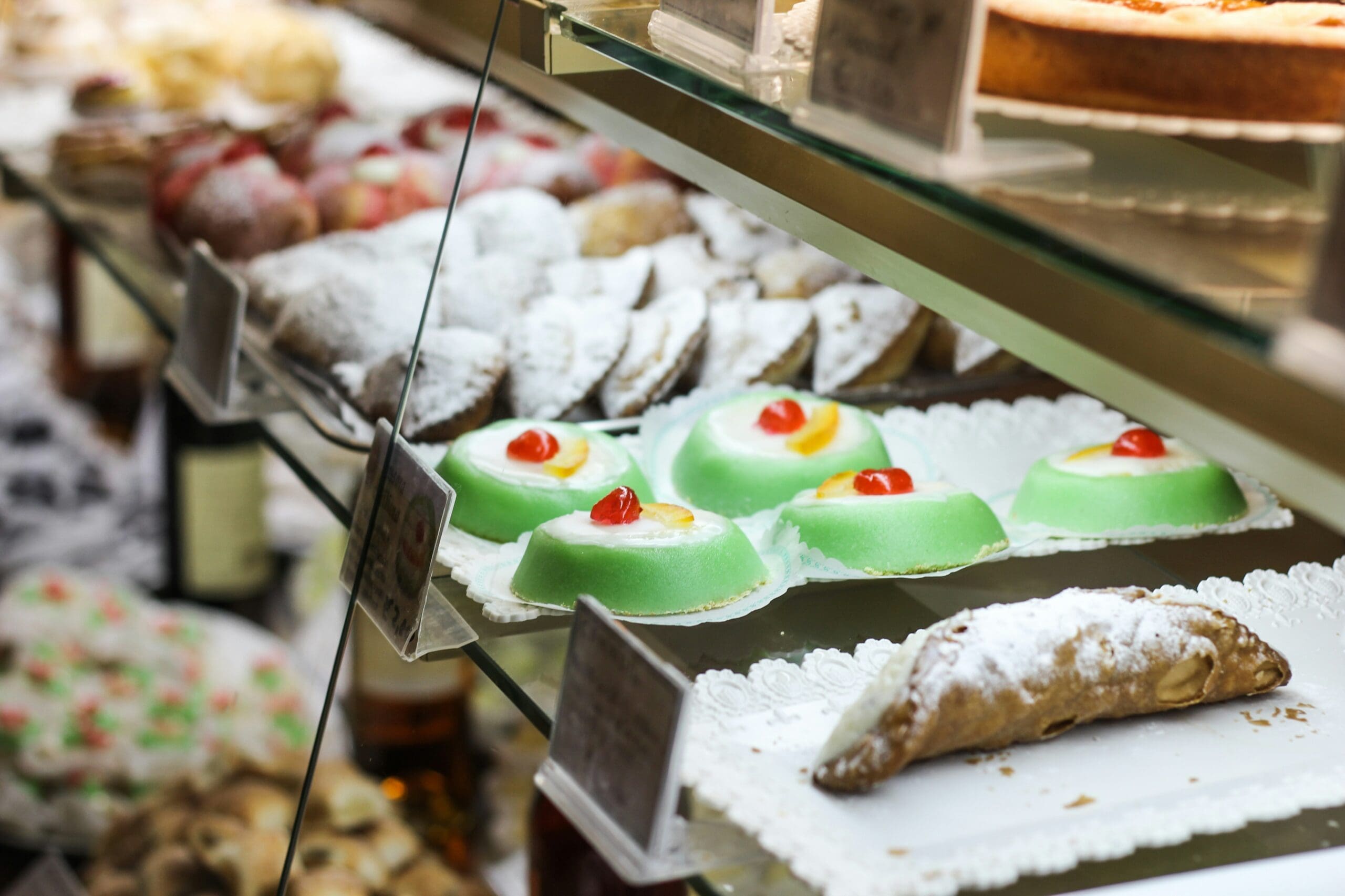
Cassata offers the clearest illustration of this logic. Its components form a complete agricultural and historical record. Ricotta reflects Sicily’s pastoral economy, where sheep’s milk was abundant but highly perishable and needed to be transformed quickly. Sugar and citrus entered the island through Arab agricultural systems that made sweetness reliable rather than exceptional. Almond paste connects directly to Arab techniques of grinding and sweetening nuts, practices shared across much of the medieval Islamic world. The final form of cassata, refined in convent kitchens under Norman and later Spanish rule, mirrors Sicily’s baroque architecture, where layered abundance communicates stability, prosperity, and order rather than indulgence for its own sake.
Cassata functions architecturally because it is built with intention. Each layer serves a purpose. The sponge absorbs moisture. The ricotta filling preserves dairy through sugar. The almond paste seals and protects. Candied fruit signals celebration and seasonality. Historically, cassata was associated with Easter, a moment when stored ingredients could finally be assembled into something visibly abundant after winter restraint. It was not meant to be eaten casually, but to mark time, survival, and continuity.
Cannoli operate according to the same logic, though in a more restrained and portable form. Fried dough shells provided a practical solution for preservation, creating a barrier that protected the filling and allowed sweets to travel. Sweetened ricotta, often perfumed with citrus peel or cinnamon, reflects Arab preferences for fragrance, contrast, and balance. The sweetness remains contained rather than expansive, and the shell enforces proportion so that nothing overwhelms the whole. Traditionally associated with Carnevale, cannoli marked a brief period of excess before the return to restraint, and their structure reflects that cultural boundary.
Marzipan, known locally as pasta reale or frutta martorana, extends this symbolism even further. Almond paste shaped into fruit is not novelty craftsmanship, but agricultural metaphor. Almonds were widely cultivated, and sugar had become accessible enough to move beyond elite use. Fruit forms represented fertility, prosperity, and renewal, particularly in a society shaped by cycles of scarcity and abundance. Originating in Palermo’s convents, marzipan fruits were often displayed before being eaten, blurring the line between food and offering. Over time, they became edible markers of memory, closely tied to All Souls’ Day and other moments when sweetness functioned as remembrance rather than pleasure.
What unites these sweets is not extravagance, but purpose. They emerged in environments where ingredients mattered, preservation was essential, and repetition reinforced meaning across generations. Their forms persisted because they solved practical problems, such as how to store milk, preserve fruit, mark celebration without waste, and make abundance legible after long periods of restraint.
This is why Sicilian sweets endure. They were never designed to surprise or entertain in isolation, but to anchor memory and continuity within daily and ritual life. Sweetness in Sicily is rarely casual, appearing instead where it carries seasonal, religious, or familial weight.
Understanding Sicilian sweets therefore requires releasing modern assumptions about dessert as finale or indulgence. These confections are not decorative conclusions to a meal. They are carefully constructed forms built from land, history, and restraint, and they remain some of the clearest expressions of how Sicily learned to taste differently, carrying memory forward through structure rather than excess.