Breakfast, Climate, and Memory in Sicily
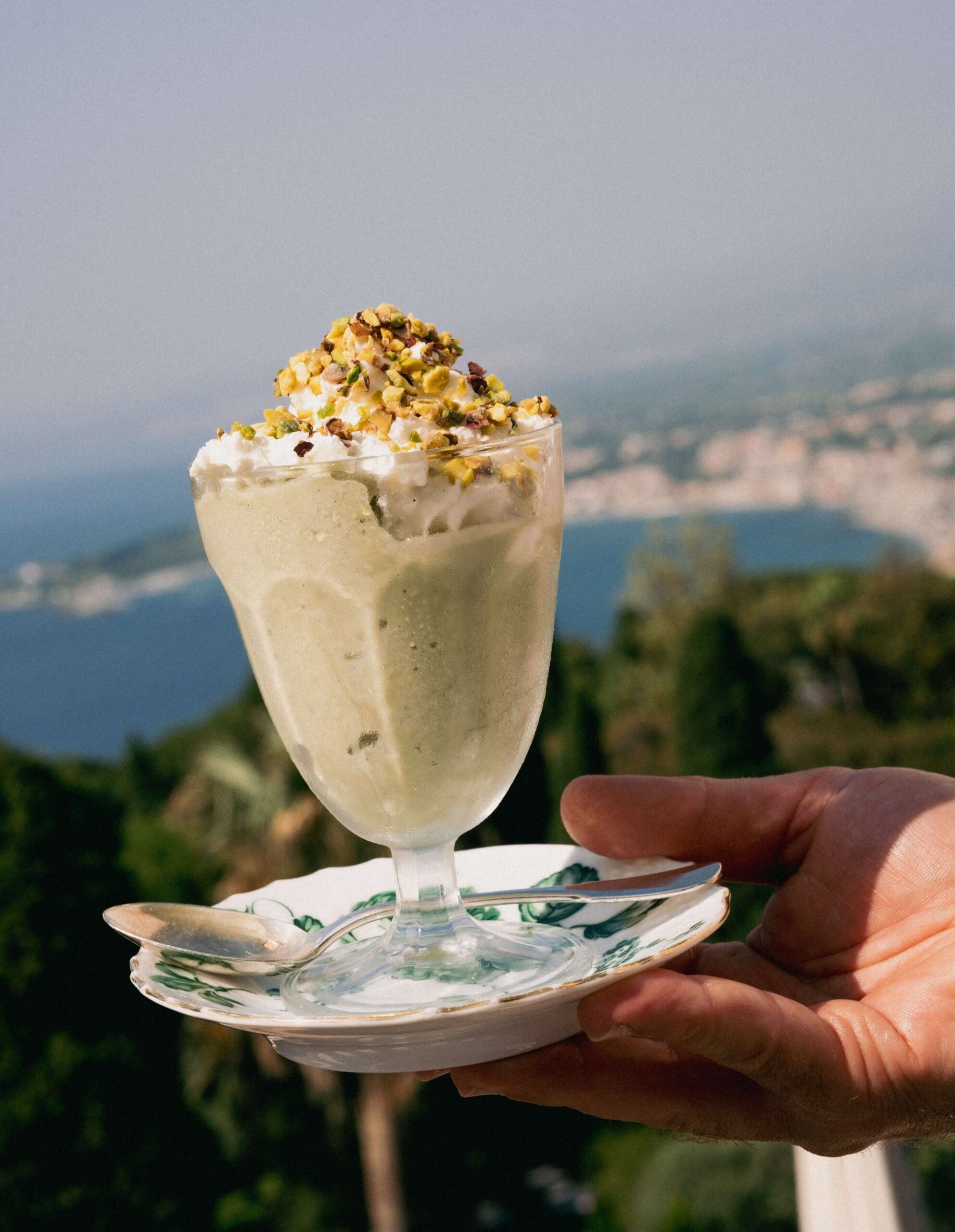
Granita is often misunderstood because it arrives cold and sweet, which leads many visitors to interpret it as dessert. In Sicily, granita occupies a very different role. It is breakfast, climate adaptation, and daily rhythm expressed through taste. To understand granita properly, it helps to begin not with sweetness, but with heat.
Sicily’s summers are long, bright, and physically demanding. Morning arrives warm rather than cool, and appetite behaves differently in that environment. Granita responds to those conditions directly. It cools the body, provides hydration, and offers nourishment without heaviness. When paired with brioche, it becomes a complete morning meal that respects the limits imposed by climate rather than pushing against them. This is not indulgence disguised as tradition, but practicality refined over centuries.
The origins of granita reach back to the Arab period, when medieval sherbets were introduced to Sicily along with advanced water management and sugar cultivation. Snow harvested from Mount Etna was mixed with fruit syrups to create chilled drinks that offered relief from heat long before mechanical refrigeration existed. What began as a luxury tied to access and labor gradually became systematized. Ice houses, storage methods, and agricultural networks made frozen refreshment sustainable, and granita entered daily life because it solved a problem rather than because it followed fashion.
The flavors associated with granita reflect Sicily’s geography and agricultural history. Lemon granita dominates in coastal and citrus growing areas, where acidity and brightness counter heat most effectively. Almond granita appears in regions with long traditions of almond cultivation, particularly around Siracusa, where its creamy texture and faint bitterness echo Arab introduced nut preparations. Coffee granita, often topped with softly whipped cream, belongs primarily to eastern Sicily and reflects later layers of habit added onto older forms. Each flavor corresponds to what the land produced reliably rather than what novelty demanded.
Equally important is when granita is eaten. Morning consumption places it firmly within the structure of the day. It replaces heaviness with clarity and allows work, conversation, and movement to begin without strain. When granita is treated as dessert, it feels excessive and out of context. When understood as breakfast, it aligns seamlessly with climate, labor patterns, and daily routine.
Granita also reveals something essential about Sicilian attitudes toward sweetness. Sweetness is present, but it is restrained and purposeful. It supports rather than overwhelms. Sugar is used to soften acidity, not to dominate it. The result is refreshment rather than indulgence, balance rather than excess. This approach reflects broader Arab influenced culinary logic, where contrast and harmony are valued more than intensity.
The endurance of granita is tied to its usefulness. It persists because it continues to work. It cools the body, respects appetite, and fits naturally into the rhythm of the day. Like many enduring Sicilian foods, it is not preserved as nostalgia, but maintained as habit. Its form has remained stable not because it resists change, but because it requires very little correction.
Granita also functions as memory. For Sicilians, it carries associations with season, place, and routine rather than spectacle. It belongs to early mornings, familiar cafés, and repeated gestures. That repetition reinforces continuity, allowing a simple combination of ice, sugar, and flavor to carry cultural weight far beyond its ingredients.
Understanding granita requires letting go of modern assumptions about how sweetness should function within a meal. It is not a finale and not a treat reserved for special occasions. It is a daily response to environment and history, shaped by necessity and refined through repetition. In this way, granita offers one of the clearest examples of how Sicilian food developed not through display, but through adaptation.
Seen through this lens, granita is not an outlier in Sicilian cuisine. It is entirely consistent with it. It reflects a culture that values balance over excess, usefulness over novelty, and continuity over reinvention. What appears simple on the surface carries a long memory beneath it, waiting to be understood by those willing to meet it on its own terms.